
Atlantic Salmon (Farmed, Cooked) vs Greek Yogurt (Plain, Whole Milk)
Side-by-side nutrition comparison per 100g. Source status differs by food; review each linked food page before relying on the values.
Per 100g
Atlantic Salmon (Farmed, Cooked)
206
calories
Per 100g
Greek Yogurt (Plain, Whole Milk)
97
calories
Nutrient Comparison
Full Nutrition Table
| Nutrient | Atlantic Salmon (Farmed, Cooked) | Greek Yogurt (Plain, Whole Milk) | Difference |
|---|---|---|---|
| Calories | 206cal | 97cal | 53% |
| Protein | 22.1g | 9g | 59% |
| Total Fat | 12.4g | 5g | 60% |
| Saturated Fat | 2.4g | 3.5g | 31% |
| Total Carbs | 0g | 3.6g | 100% |
| Fiber | 0g | 0g | = |
| Sugar | 0g | 3.6g | 100% |
| Sodium | 61mg | 47mg | 23% |
| Cholesterol | 63mg | 13mg | 79% |
| Potassium | 384mg | 141mg | 63% |
| Calcium | 15mg | 100mg | 85% |
| Iron | 0.3mg | 0.1mg | 67% |
Higher and lower describe the amount shown for this comparison basis. They are not health rankings.
Key Differences
Calories
Greek Yogurt (Plain, Whole Milk) contains 97 calories compared with 206 calories for the same stated basis (53% fewer).
Protein
Atlantic Salmon (Farmed, Cooked) contains 22.1g of protein compared with 9g.
Carbohydrate
Atlantic Salmon (Farmed, Cooked) contains 0g of carbohydrate compared with 3.6g.
Total fat
Greek Yogurt (Plain, Whole Milk) contains 5g of total fat compared with 12.4g.
Frequently Asked Questions
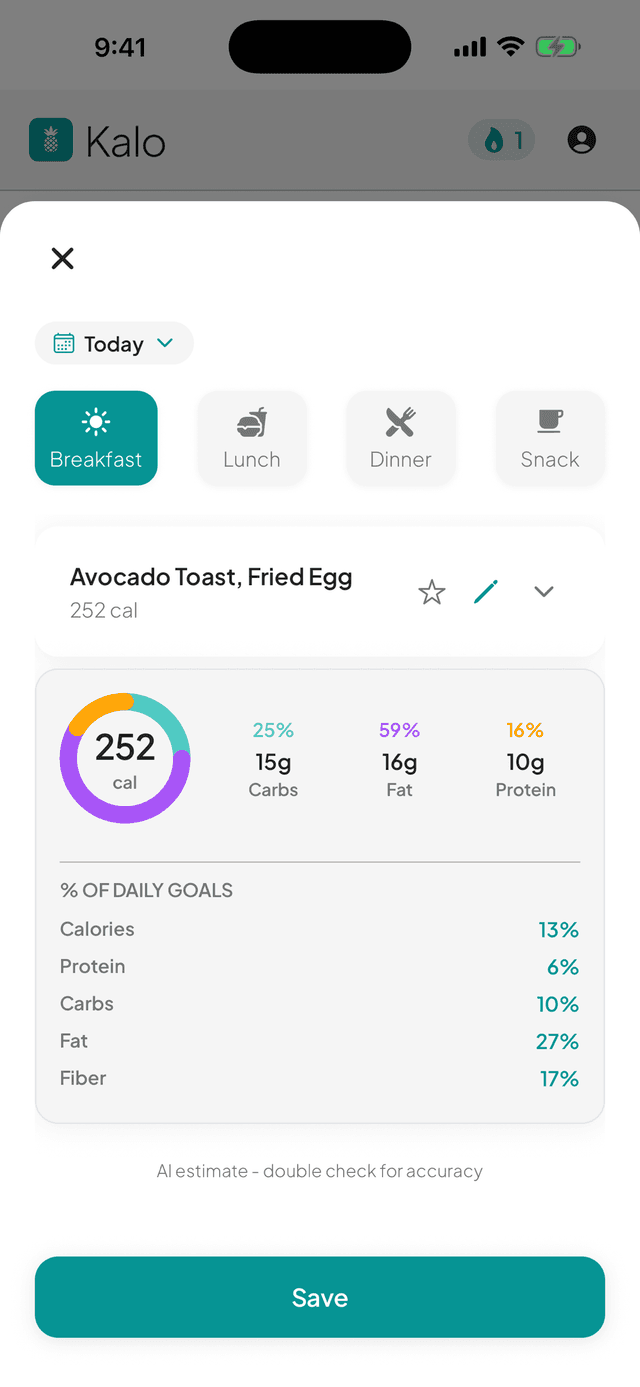
Tired of searching?
Just point your camera.
Kalo uses AI to identify your food and log calories in seconds. No more searching databases or guessing portion sizes.



View Full Nutrition
Comparison based on per 100g. Atlantic Salmon (Farmed, Cooked): normalized from USDA FoodData Central record 175168. Greek Yogurt (Plain, Whole Milk): Kalo estimate without a verified record-level citation. Values can vary based on preparation method, brand, and serving size. Read the nutrition-data methodology.