
Chicken Breast (Roasted, Skinless) vs Eggs (Large, Hard-Boiled)
Side-by-side comparison of source-checked nutrition references per 100g. Both foods link to their record-level sources.
Per 100g
Chicken Breast (Roasted, Skinless)
165
calories
Per 100g
Eggs (Large, Hard-Boiled)
155
calories
Nutrient Comparison
Full Nutrition Table
| Nutrient | Chicken Breast (Roasted, Skinless) | Eggs (Large, Hard-Boiled) | Difference |
|---|---|---|---|
| Calories | 165cal | 155cal | 6% |
| Protein | 31g | 12.6g | 59% |
| Total Fat | 3.6g | 10.6g | 66% |
| Saturated Fat | 1g | 3.3g | 70% |
| Total Carbs | 0g | 1.1g | 100% |
| Fiber | 0g | 0g | = |
| Sugar | 0g | 1.1g | 100% |
| Sodium | 74mg | 124mg | 40% |
| Cholesterol | 85mg | 373mg | 77% |
| Potassium | 256mg | 126mg | 51% |
| Calcium | 15mg | 50mg | 70% |
| Iron | 1mg | 1.2mg | 17% |
Higher and lower describe the amount shown for this comparison basis. They are not health rankings.
Key Differences
Calories
Eggs (Large, Hard-Boiled) contains 155 calories compared with 165 calories for the same stated basis (6% fewer).
Protein
Chicken Breast (Roasted, Skinless) contains 31g of protein compared with 12.6g.
Carbohydrate
Chicken Breast (Roasted, Skinless) contains 0g of carbohydrate compared with 1.1g.
Total fat
Chicken Breast (Roasted, Skinless) contains 3.6g of total fat compared with 10.6g.
Frequently Asked Questions
See how your meal fits the day
Eating Chicken Breast (Roasted, Skinless) or Eggs (Large, Hard-Boiled)? Log it with the rest of your meal in Kalo. Review the portion and nutrition estimate, then see what is left in your daily calorie and macro targets.


Free to download. Using Kalo requires a subscription.
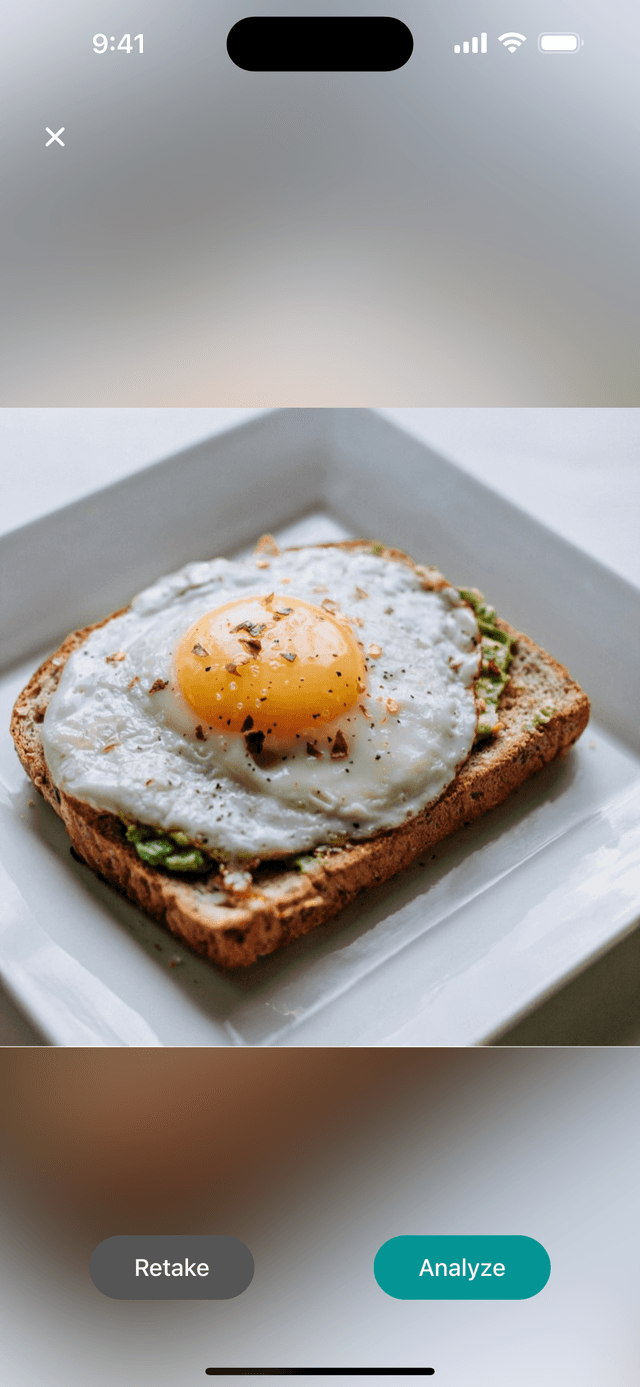
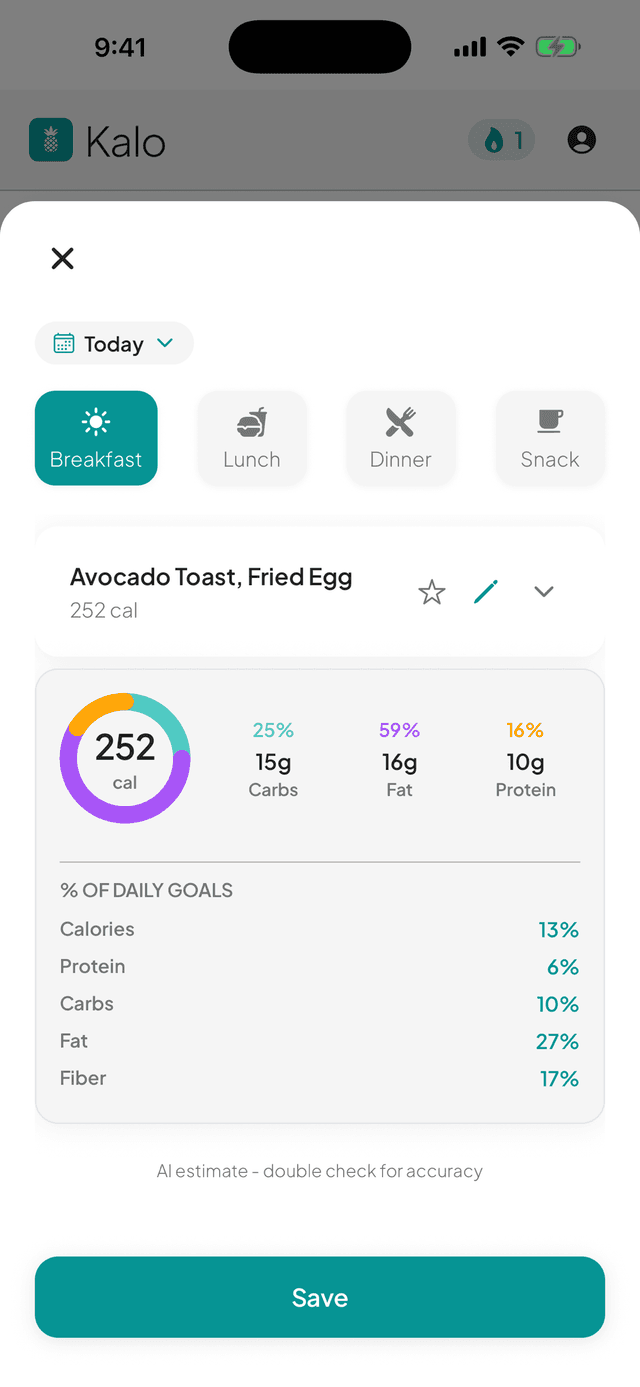
Example meal and estimate. Review portions and ingredients a photo can miss, including oils and sauces.
View Full Nutrition
Comparison based on per 100g. Chicken Breast (Roasted, Skinless): normalized from USDA FoodData Central record 171477. Eggs (Large, Hard-Boiled): normalized from USDA FoodData Central record 173424. Values can vary based on preparation method, brand, and serving size. Read the nutrition-data methodology.