This article is for educational purposes only and is not medical advice. Talk with a qualified healthcare professional before making major nutrition, weight loss, or medication-related changes.
To track calories when eating out, use menu nutrition info when available, photograph the plate before you eat, estimate the visible protein, carbs, fats, sauces, and drinks, then add a 100 to 300 calorie buffer for hidden oils and oversized portions. Tracking calories when eating out means building a reasonable estimate for the whole restaurant meal, not finding a perfect database match for every ingredient.
If you track carefully all week but let restaurant meals go invisible, the problem is not the dinner itself. The threat is the black box: sauces you did not see, oil you did not pour, portions you did not choose, and drinks that never felt like food. This guide is not for skipping restaurants; it is for keeping your social life while keeping enough data to know whether your week still works.
Key Takeaways
- Chain restaurants with 20 or more locations usually list calories, so start with menu or website nutrition info when it exists.
- Local restaurants need an estimate, not perfection; break the plate into protein, starch, fat, sauce, drinks, and extras.
- Hidden oils, dressings, cheese, fried coatings, and drinks are the biggest tracking gaps because they add calories without adding much visible volume.
- A photo before the first bite gives you a second chance to estimate when you are not sitting at the table anymore.
- The best restaurant log is honest enough to preserve the weekly trend, even if it is not exact to the calorie.
What Is Restaurant Calorie Tracking?
Restaurant calorie tracking is the process of estimating a meal you did not cook by using menu labels, visual portions, ingredient clues, and a margin for hidden calories. It is different from tracking packaged food because you do not control the recipe, oil, portion size, or sauce amount.
That does not make the meal impossible to track. It just changes the goal. At home, you can chase precision. At a restaurant, you need a consistent estimate that keeps the meal from disappearing from your weekly average.
How Do You Track Calories at a Chain Restaurant?
Chain restaurants are the easiest place to start because many publish calorie information. In the United States, FDA menu labeling rules apply to restaurants and similar food establishments that are part of a chain with 20 or more locations under the same name.
- Search the restaurant name plus nutrition. Use the official restaurant page when possible, not a random database entry.
- Match the exact item and size. Watch for small differences like grilled vs. crispy, small vs. large, regular vs. premium side, and half vs. full portion.
- Add modifications separately. Extra cheese, sauces, dressings, guacamole, fries, cocktails, and desserts should not get folded into the entree estimate.
- Use calorie ranges when the menu gives them. If a bowl shows 650 to 950 calories depending on toppings, log the version closest to your actual order.
- Save the meal if you order it often. The next time takes seconds instead of turning dinner into homework.
The persuasion trick here is simple: remove the decision before hunger gets a vote. If you know the order before you arrive, the menu has less power over the version of you that is tired, hungry, and watching everyone else order appetizers.
How Do You Track Calories at a Local Restaurant?
Local restaurants are harder because there may be no nutrition page and the same dish can vary by cook. Use a component estimate: protein, starch, fat, sauce, drinks, and extras. This is the same practical skill behind tracking calories without weighing food, just with a bigger error range.
Local Restaurant Estimate Template
- Protein: estimate the cooked portion first, usually 4 to 8 ounces for chicken, fish, steak, tofu, shrimp, or eggs.
- Carbs: estimate rice, pasta, potatoes, tortillas, bread, noodles, chips, or dessert separately.
- Fats: add oils, butter, avocado, nuts, cheese, creamy sauces, mayo, pesto, and fried coatings.
- Sauces and dressings: log them on the side when you can, or add a 100 to 200 calorie buffer when they are mixed in.
- Drinks: log alcohol, juice, soda, sweet tea, coffee drinks, and cocktails as their own item.
If you are unsure, choose a comparable restaurant entry and round up slightly. A 700-calorie estimate that should have been 850 is still more useful than logging nothing and pretending the meal never happened.
What Are the Hidden Calories in Restaurant Meals?
Restaurant calories hide in ingredients that improve flavor without taking up much space on the plate. That is why a meal can look reasonable and still land much higher than your home version.
Visible Calories
- Chicken, steak, salmon, shrimp, tofu, eggs
- Rice, pasta, potatoes, tortillas, bread
- Vegetables, fruit, salads, soups
- Usually easier to estimate from the photo
Hidden Calories
- Oil, butter, creamy sauces, dressings
- Cheese, avocado, nuts, fried coatings
- Alcohol, sweet drinks, bread baskets, chips
- Usually where the estimate drifts
If you want the broader restaurant strategy, our guide on how to eat out without ruining your diet covers ordering choices, social pressure, and the day-after reset. This article is narrower: how to log the meal once you decide to eat it.
Should You Track Before or After Eating Out?
The best option is to pre-track the meal when you can. The second-best option is to take a photo and track it after. The worst option is to wait until memory turns the whole dinner into a blur.
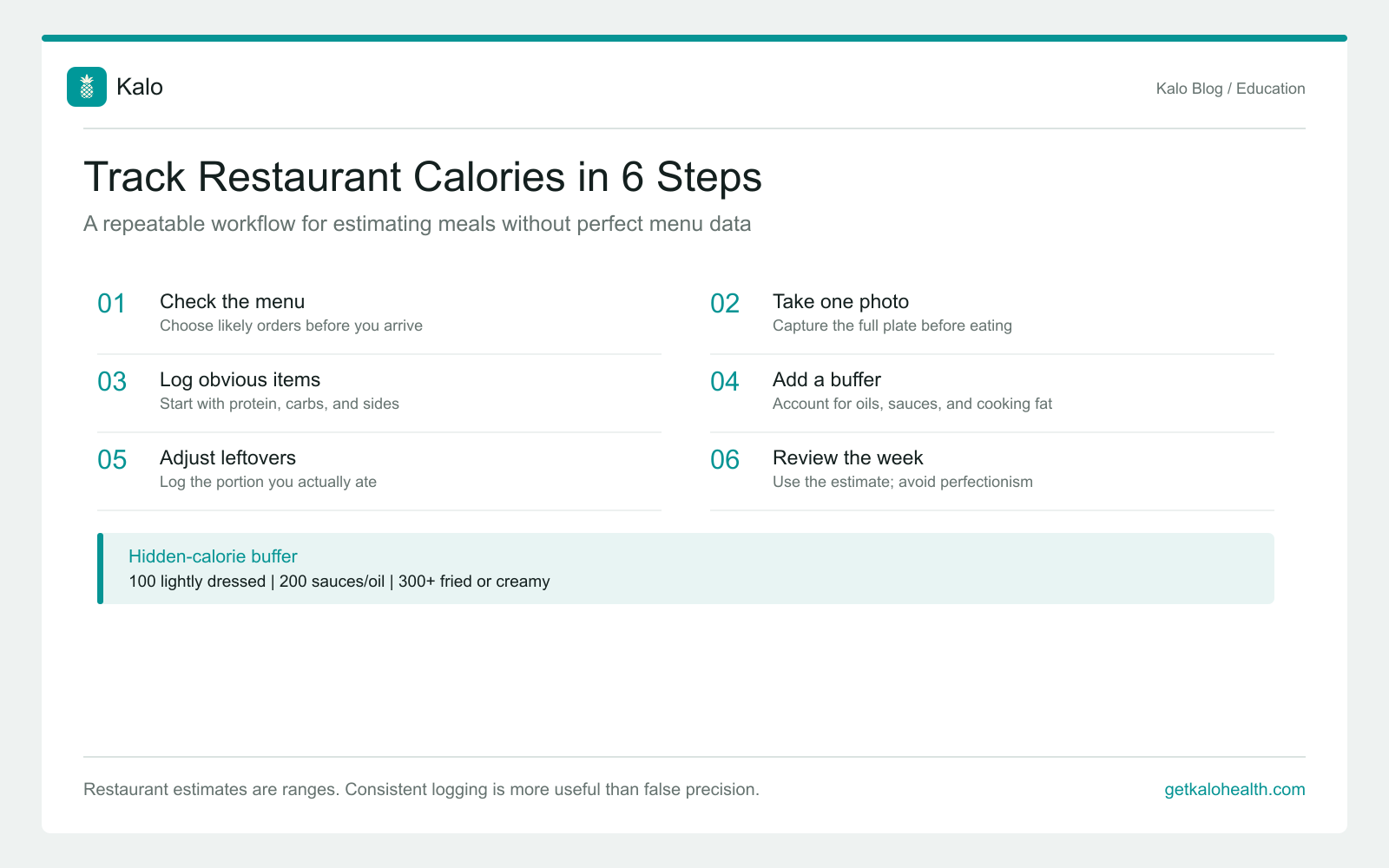
- Before you go, check the menu. Pick the main meal, estimate the calories, and decide which extras matter most to you.
- At the table, take one clear photo. Capture the full plate before bites, sauces, or shared sides make the estimate harder.
- Log the obvious items first. Protein, starch, vegetables, drink, and dessert are the core of the meal.
- Add hidden-calorie buffers. Use 100 calories for a lightly dressed or grilled meal, 200 for sauces or oil, and 300+ for fried, creamy, or buttery meals.
- Adjust for leftovers. If you take half home, log half the entree and any full drinks, apps, or sides you ate.
- Review the week, not the meal. One high-calorie restaurant meal can fit if your weekly average still supports your target.
How Accurate Does a Restaurant Calorie Estimate Need to Be?
A restaurant estimate does not need to be perfect to be useful. If your goal is a 300 to 500 calorie daily deficit, being off by 100 to 200 calories on one meal is usually workable. Being off by 700 calories and then skipping the log entirely is what breaks the feedback loop.
Think of tracking like a map, not a courtroom transcript. You need enough accuracy to see the direction your week is going. If the scale trend stalls after several restaurant-heavy weeks, then tighten the estimate, reduce the hidden-calorie buffer, or use the calorie deficit calculator to check whether your target still has enough margin.
What Should You Do If You Go Over Calories at a Restaurant?
Do not turn one meal into a moral verdict. Log it, learn from it, and return to your normal target at the next meal. A restaurant night only becomes a problem when it becomes invisible or turns into a weekend of guessing.
If you keep losing the thread after meals out, pair this with our guide on how to stay in a calorie deficit. The useful question is not whether the restaurant meal was perfect. It is whether the week still has enough structure to keep going.
Frequently Asked Questions
How do you count calories at a restaurant with no nutrition facts?
Break the meal into visible parts: protein, carbs, fats, sauces, drinks, and extras. Use a similar restaurant or generic entry, then add 100 to 300 calories for hidden oils, butter, creamy sauces, or oversized portions.
Should I overestimate restaurant calories?
Slightly, yes. A small buffer is useful because restaurant meals often include cooking oils, sauces, and portions you cannot measure. The goal is not to punish yourself; it is to prevent a low estimate from giving you false feedback.
Do chain restaurants have accurate calories?
Chain restaurant calories are more useful than guessing because the listed item has a standardized recipe. But real portions, toppings, substitutions, and kitchen variation still matter, so log modifications separately when you can.
Is it better to skip tracking a cheat meal?
No. A rough entry protects the weekly trend better than a blank day. You do not need to compensate aggressively after; just return to your normal target at the next meal.
Can a photo help estimate restaurant calories?
Yes. A photo preserves the portion size, visible ingredients, sides, sauces, and leftovers so you can estimate later. It is especially helpful for mixed plates where manual database searching gets tedious.
Sources
- Calories on the Menu - U.S. Food and Drug Administration
- Menu Labeling Requirements - U.S. Food and Drug Administration
- Food Away From Home - USDA Economic Research Service
- Self-Monitoring in Weight Loss: A Systematic Review of the Literature - Journal of the American Dietetic Association
- Steps for Losing Weight - Centers for Disease Control and Prevention
How Kalo Helps You Track Calories When Eating Out
Restaurant tracking is hard because the meal is temporary. The plate changes as soon as you take the first bite, and by the time you get home, the sauce, side, drink, and portion size are fuzzy.
Kalo makes the first step small: snap the plate before you eat. Kalo can identify visible foods, estimate portions, and break a restaurant plate into editable parts like salmon, rice, vegetables, sauce, and dressing. You still get to review the estimate, but you are no longer starting from a blank search box after dinner.
Eating out tonight? Download Kalo to snap the meal, log the visible parts, and keep restaurant calories from disappearing from your weekly target.
Related Articles

Why Don't Calories Match the Macros on a Food Label?
Rounding, fiber, and sugar alcohols can make calories differ from a 4-4-9 macro calculation. See two worked examples and...
What to Eat for Dinner Based on Your Remaining Calories and Protein
Compare three dinner combinations, check cooked portions, and use your remaining calories and protein as planning estima...

How Many Calories Does Walking 3,000 Steps Burn?
3,000 steps burn about 85-230 total calories depending on weight and cadence. See estimates, active calories, distance,...
Know what to eat next.
Kalo sets your daily calorie and macro targets and suggests meals that fit your goals, your diet, and what you have left today.