How to Stay in a Calorie Deficit: 7 Steps That Work
This article is for educational purposes only and is not medical advice. Talk with a qualified healthcare professional before making major nutrition, weight loss, or medication-related changes.
To stay in a calorie deficit, keep your average intake about 300 to 500 calories below your daily burn most days, then confirm it with 2 to 4 weeks of trend weight. Staying in a calorie deficit means your weekly calorie intake is consistently lower than your TDEE, not that every meal is perfect or every day is low-calorie.
If you start strong on Monday and lose the deficit by Friday, the threat is usually not one bad meal. It is the untracked oil, bites while cooking, restaurant portions, drinks, snacks, and weekend math that quietly erase a small deficit. This guide is not for crash dieting; it is for building a repeatable system you can come back to before frustration turns into another restart.
Key Takeaways
- A 300 to 500 calorie deficit is the best starting point for many adults because it is large enough to show progress but small enough to repeat.
- Weekly averages matter more than perfect days; one higher-calorie day does not ruin the week if the average still lands in a deficit.
- Most people fall out of a deficit through small leaks, like oils, sauces, drinks, snacks, and restaurant portions, not one dramatic mistake.
- Protein, fiber, planned meals, and walking make the deficit easier because they reduce hunger and create a wider margin for normal life.
- The first step is a 3-day audit: track one normal weekday, one busy day, and one weekend day before cutting calories harder.
What Does It Mean to Stay in a Calorie Deficit?
Staying in a calorie deficit means your average calorie intake is lower than the calories your body burns over time. Your body burns calories through basal metabolism, daily movement, exercise, digestion, and normal body processes. Your intake comes from food and drinks.
The important word is average. You can eat 1,800 calories on one day, 2,200 the next, and still be in a deficit if your weekly average is below your maintenance calories. That is why a workable deficit feels more like a weekly budget than a daily pass-fail test.
How Do You Stay in a Calorie Deficit Without Feeling Miserable?
The goal is not to make your deficit as large as possible. The goal is to make it repeatable enough that your normal week can survive hunger, restaurants, work stress, family meals, and imperfect tracking.
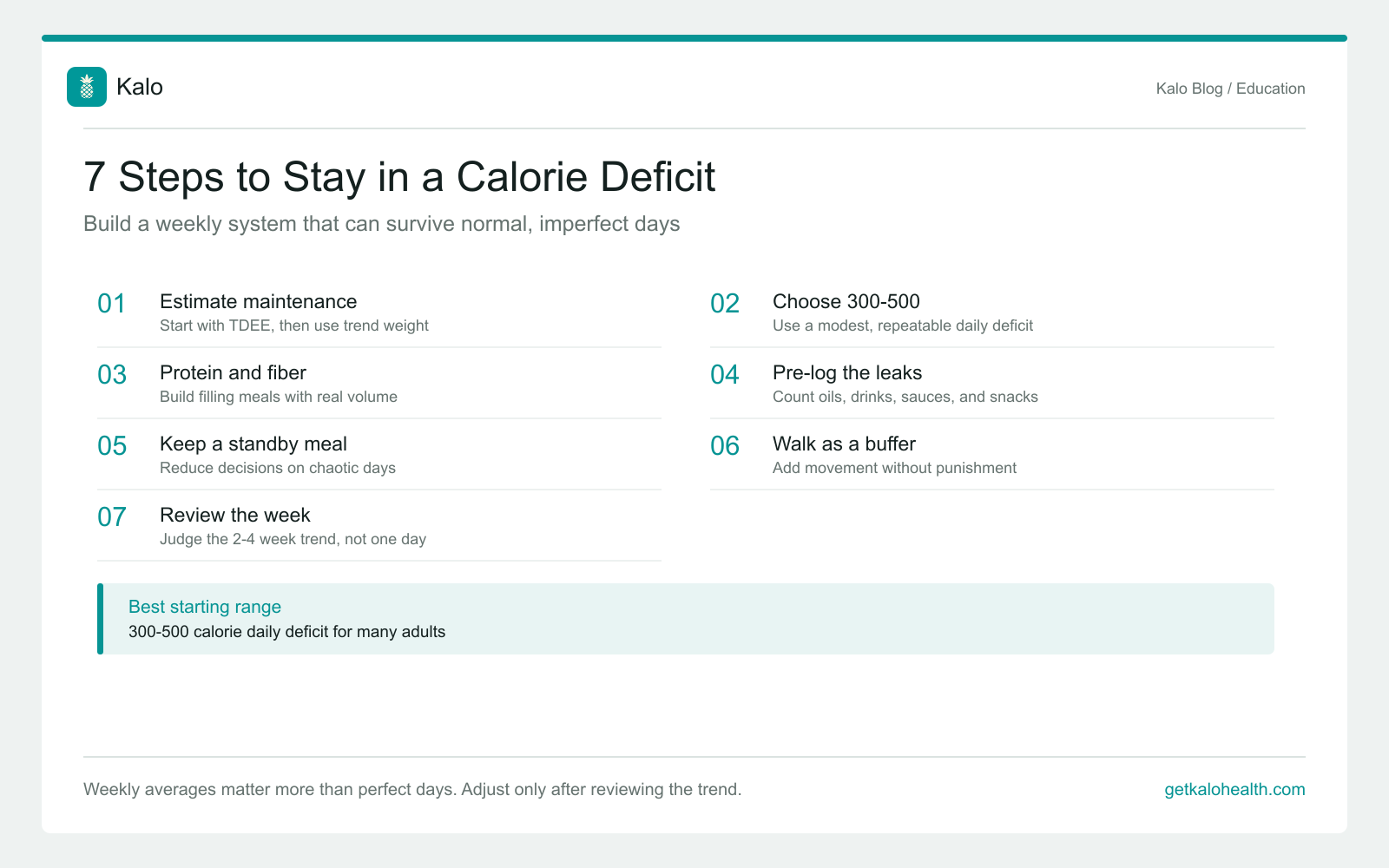
- Estimate maintenance first. Use your TDEE as a starting point, then compare it with real trend weight. If you need the foundation, start with our guide to what a calorie deficit is and how it works.
- Choose a modest deficit. A 300 to 500 calorie daily deficit is enough for steady progress for many adults. If you want a personalized target, use the calorie deficit calculator before choosing a number.
- Build meals around protein and fiber. Protein helps meals feel more complete, while fruits, vegetables, beans, oats, potatoes, and whole grains add volume. A smaller deficit is easier to keep when your meals look like real meals.
- Pre-log the foods that usually get missed. Oils, butter, dressing, cheese, nuts, alcohol, coffee drinks, sauces, and bites while cooking are the classic deficit leaks. They are not forbidden; they just need a line in the budget.
- Keep one repeatable meal on standby. Pick a breakfast, lunch, or dinner you can use when the day gets chaotic. The more decisions you remove, the less likely hunger is to negotiate for you.
- Use walking as a buffer, not a punishment. A 20 to 45 minute walk can widen the margin without making you ravenous. Do not treat it as permission to double-count exercise calories automatically.
- Review the week instead of judging the day. If your weight trend is moving over 2 to 4 weeks, the system is working. If it is not, use our checklist on why weight loss stalls in a calorie deficit before cutting harder.
What Usually Knocks People Out of a Calorie Deficit?
The obvious answer is overeating, but that is too vague to be useful. The real problem is usually a small mismatch between the plan you think you are following and the week you are actually living.
The Obvious Problem
- Going far over calories at one meal
- Skipping tracking for a whole weekend
- Ordering more food than planned
- Feels dramatic, so it gets your attention
The Quiet Deficit Leak
- Two tablespoons of oil instead of one
- A 250-calorie coffee drink most mornings
- Sauce, cheese, or nuts added without logging
- Feels small, so it repeats unnoticed
This is where the identity shift matters. If you are someone who wants results without turning food into a full-time job, the solution is not more guilt. It is better visibility: know which small choices are costing the most, then decide which ones are worth keeping.
How Big Should Your Calorie Deficit Be?
Most people should start with the smallest deficit that creates measurable progress. A huge deficit can produce fast scale movement, but it also raises the odds of hunger, fatigue, lower activity, and rebound eating.
| Daily deficit | Estimated weekly loss | Best fit | Watch out for |
|---|---|---|---|
| 250 calories | About 0.5 lb/week | Smaller bodies, final few pounds, high hunger | Progress can be hard to see week to week |
| 300 to 500 calories | About 0.5 to 1 lb/week | Most adults starting a sustainable plan | Tracking gaps can erase it quickly |
| 750 calories | About 1 to 1.5 lb/week | Larger or more active adults with room to cut | Hunger and low energy may rise |
| 1,000 calories | About 2 lb/week | Short-term use for some people only | Too aggressive for many bodies and lifestyles |
This is also why calorie targets need context. Someone eating 1,700 calories may be in a solid deficit, at maintenance, or too low depending on body size and activity. If that is your target, our guide to whether 1700 calories is enough to lose weight breaks down who it fits.
How Can You Tell If Your Calorie Deficit Is Working?
A working deficit does not always show up as a lower scale number every morning. Water, sodium, soreness, menstrual cycle changes, constipation, and restaurant meals can hide fat loss for several days at a time.
Use This 2 to 4 Week Check
- Track your 7-day average weight instead of reacting to one weigh-in.
- Check whether your average is down after 2 to 4 weeks, not after 2 to 4 days.
- Compare your logged intake with your expected target and look for missing drinks, oils, sauces, snacks, and weekend meals.
- Notice hunger, energy, sleep, and training because a deficit that wrecks your week usually will not last.
If the trend is down and you feel functional, keep going. If the trend is flat, do not slash calories first. Audit accuracy, steps, sleep, restaurant meals, and weekend intake before deciding the target is wrong.
What Should You Do When You Fall Out of a Calorie Deficit?
Do not try to punish the next day into fixing the previous one. That creates the binge-restrict loop that makes staying in a deficit feel impossible.
- Log the meal as best you can. A rough entry is better than turning the day invisible.
- Find the cause. Was it hunger, no plan, a restaurant meal, alcohol, stress, or eating too little earlier?
- Choose one correction. Add protein at breakfast, pre-log dinner, walk after work, or plan the restaurant order before you arrive.
- Return to the normal target at the next meal. You do not need a cleanse, fast, or double workout. You need the next boring repeatable action.
That is the whole transformation: from guessing, reacting, and restarting to noticing the leak early enough to fix it. The smaller the correction, the easier it is to actually do.
Frequently Asked Questions
Can you stay in a calorie deficit without counting calories?
Yes, but you still need some way to reduce average intake or increase average activity. Portion routines, higher-protein meals, fewer calorie-dense drinks, and consistent walking can work, but tracking for a few days often reveals which changes matter most.
Why am I not losing weight if I am in a calorie deficit?
If your 2 to 4 week average weight is not moving, your true weekly deficit may be smaller than expected. Common reasons include underestimated food, overestimated exercise, water retention, lower daily movement, or a maintenance estimate that is too high.
Is it okay to go over calories one day?
Yes. One higher-calorie day does not matter much if your weekly average still lands below maintenance. The risk is not one day; it is using one day as a reason to stop tracking the rest of the week.
How long should you stay in a calorie deficit?
Many people do best with 8 to 12 week deficit phases, followed by a maintenance break if hunger, fatigue, or adherence gets harder. People with medical conditions, pregnancy, eating disorder history, or very low calorie targets should work with a clinician or registered dietitian.
How do you stay in a deficit on weekends?
Plan the highest-calorie meal first, then build the rest of the day around protein, fruit, vegetables, and movement. Pre-logging the restaurant meal or drinks gives you a budget before the weekend starts negotiating with you.
Sources
- Steps for Losing Weight - Centers for Disease Control and Prevention
- Body Weight Planner - National Institute of Diabetes and Digestive and Kidney Diseases
- Physical Activity Guidelines for Americans - U.S. Department of Health and Human Services
- Dietary Guidelines for Americans, 2020-2025 - USDA and HHS
- Self-Monitoring in Weight Loss: A Systematic Review of the Literature - Journal of the American Dietetic Association
How Kalo Helps You Stay in a Calorie Deficit
Staying in a deficit is less about having more willpower and more about seeing the calories that usually stay hidden. A small deficit can disappear through sauce, oil, toppings, coffee drinks, snacks, and restaurant portions before you feel like anything went wrong.
Kalo helps you make that visible without turning every meal into a spreadsheet. Snap a photo of a burrito bowl, and Kalo can break it into editable parts like rice, beans, protein, avocado, cheese, salsa, and sauce so you can adjust the estimate instead of logging one vague bowl. The first step is simple: take one photo of the meal you usually guess on and make the hidden parts visible.
Trying to stay in a calorie deficit without restarting every Monday? Download Kalo today to snap meals, catch hidden calories, and keep your weekly deficit honest.
Related Articles

Why Don't Calories Match the Macros on a Food Label?
Rounding, fiber, and sugar alcohols can make calories differ from a 4-4-9 macro calculation. See two worked examples and...

What to Eat for Dinner Based on Your Remaining Calories and Protein
Compare three dinner combinations, check cooked portions, and use your remaining calories and protein as planning estima...

How Many Calories Does Walking 3,000 Steps Burn?
3,000 steps burn about 85-230 total calories depending on weight and cadence. See estimates, active calories, distance,...
Know what to eat next.
Kalo sets your daily calorie and macro targets and suggests meals that fit your goals, your diet, and what you have left today.